
Patio or Decking: Which Is Right for Your Garden?
Patios and decking are two of the most popular ways to create a usable outdoor surface, and both can look superb. The right choice depends less on which is better in general and more on your garden, your home and how you want to use the space. Here is an honest look at how they compare.
How They Look
A patio, laid in natural stone, porcelain or block paving, gives a solid, permanent surface that sits naturally beside the house. Porcelain gives clean lines and a consistent finish. Natural stone such as sandstone weathers and gains character over time. Block paving allows patterns, borders and curves.
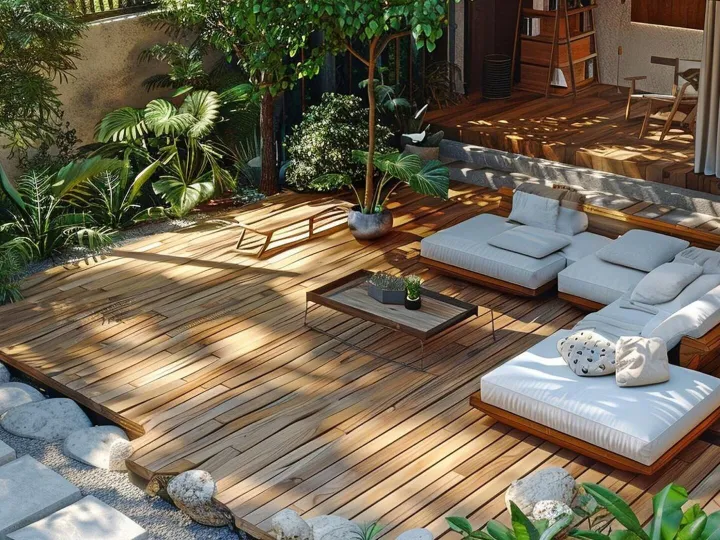
Decking brings warmth and texture, whether in natural timber or composite boards, and it suits contemporary and traditional gardens alike. It can also be built as a raised platform or across several levels, which a patio cannot easily do without walls and steps.
Maintenance
Neither option is maintenance-free, but the upkeep is different.
A well-laid patio needs an occasional sweep and wash, and porcelain in particular is very low-maintenance. Natural stone may need cleaning now and then to keep it looking its best, and any surface will collect moss in a damp, shady corner.
Timber decking needs more care. Regular cleaning and periodic treatment help it stand up to the weather, and like any timber it can become slippery when it is wet and shaded. Composite decking reduces that work considerably, because the boards resist fading, warping and splintering. That is one reason many homeowners now choose composite.
What Affects the Cost
We do not publish set prices, because no two gardens are the same, but the main cost factors are similar for both:
- The size of the area
- The material, since natural stones, porcelain ranges and decking boards vary widely
- The groundwork: excavation, levelling and drainage for a patio, or the subframe and supports for a deck
- The site itself, including slopes, access and anything that has to be removed or worked around
- Extras such as steps, edging, lighting, balustrades or built-in seating
On a sloping garden a raised deck can sometimes avoid the extensive groundwork a level patio would need. On flat ground a patio is often the more straightforward choice. The only reliable way to compare the two for your garden is a quote for each.
Which Suits Your Garden?
A patio may suit you if
- Your garden is fairly level
- You want a hard-wearing surface for dining and heavy furniture
- You would like the lowest possible upkeep
- You want the surface to sit flush with paths and lawn
Decking may suit you if
- Your garden slopes or has a change in level
- You want a raised area to catch the sun or the view
- You like the warmth and feel of timber underfoot
- You would like split levels, built-in seating or planters
Questions to Ask Before You Decide
- How will you use the space most: dining, relaxing, entertaining or children playing?
- Is the ground level, or does it slope away from the house?
- How much time do you want to spend on upkeep each year?
- Which spots get the sun at the times you are most likely to sit outside?
- Does the surface need to connect with existing paths, a lawn or a garden room?
Answering these honestly usually points clearly to one option, or to a mix of both.
You Do Not Have to Choose Just One
Many gardens use both: a patio near the house for dining and a deck further out where the ground drops away, or a terrace that combines stone paving with timber steps. Planned together, the two materials can define separate areas of the garden without it feeling disjointed.
Talk It Through With Us
Briox Landscaping lays bespoke patios and builds timber and composite decking for homeowners across Chester, the Wirral, Cheshire and North Wales, often as part of a complete garden makeover. We will look at your garden, give you honest advice on which option suits it and provide a free, no-obligation quote.
The Nursery, Coalpit Lane, Saughall
07949 418571
brioxlandscaping@gmail.com